


Black trapezoidal PVC roofing tile
Key words:
Key words:
Black trapezoidal PVC roofing tile
Classification:
Related Description

Trapezoidal PVC‑steel roofing tile, Wadesiju APVC‑A series
Deshiju APVC‑A Series: This product is primarily formulated with polyvinyl chloride resin (PVC), reinforced with red clay, and incorporates UV stabilizers and antioxidants. Its surface layer is developed using a proprietary formulation, meticulously blended according to scientific proportions and manufactured through advanced processing technologies. These measures significantly enhance the product’s oxygen index, surface hardness, mechanical strength, and resistance to acid and alkali corrosion, while also slowing down aging and color fading.
Taxi Residence APVC-A Series
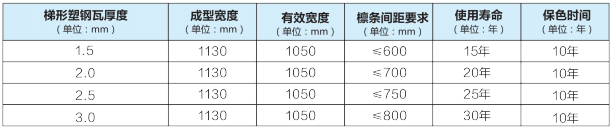
Trapezoidal PVC Series for Steel-Plastic Roofing Tiles
Taxisu PVC Series: This product is primarily formulated with polyvinyl chloride resin (PVC), reinforced with red clay, and incorporates UV‑stabilizers and antioxidants. Its surface layer is crafted using a proprietary formulation, meticulously balanced through scientific proportions and advanced manufacturing techniques, significantly enhancing the product’s oxygen index, surface hardness, mechanical strength, and resistance to acid and alkali corrosion, while also slowing down aging and color fading.
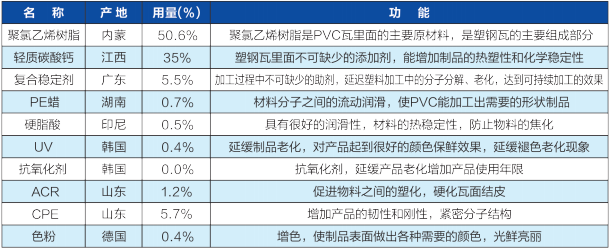
Taxi Home PVC Series
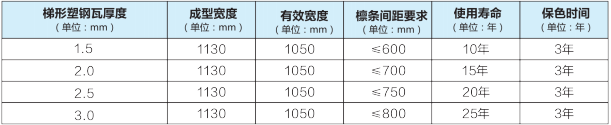
Taxi Residence APVC-A Series
1. Exceptional aging resistance
2 Excellent corrosion resistance
3 Excellent weather resistance
4 Excellent thermal insulation, soundproofing, and fire resistance performance
Installation Technical Guide
1. For roofs installing our products, a slope of approximately 20% is recommended; when the building span exceeds 30 meters, the slope should be around 25%.
2. For the steel structural materials used in installing our products, it is recommended to select materials that comply with national standards; their specifications and grades must meet the required load-bearing capacity, and consistency must be ensured.
3. The ultraviolet radiation in the installation area shall not exceed 50 mW/m², and the ambient temperature shall be ≤ 50°C.
4. Do not place this product directly over other products with different waveforms or wavelengths, nor apply it directly to metal‑covered surfaces, to prevent the metal from absorbing heat and causing deformation of the PVC material.
5. PVC material exhibits thermal expansion and contraction; therefore, the length of each individual component should not exceed 10 meters to prevent excessive dimensional changes that could loosen fastening screws or crack the mounting holes.
6. Purlin spacing must be uniform, with a maximum spacing of 800 mm (within the standard wave‑form spacing requirements).
7. During installation, personnel must not step on the product while standing over an open space to prevent safety accidents or product damage.
8. Please pre-drill holes using a hand‑held drill; use a drill bit specifically designed for plastic, with a diameter 2–4 mm larger than the mounting hole’s nominal size to allow for thermal expansion and contraction. Ensure the edges of the drilled holes are smooth, avoid applying excessive force, and exercise extra caution when drilling in cold weather. Place a suitable support beneath the product during drilling.
9. All fasteners shall be installed at the ridge, ensuring they are perpendicular to the roofing surface. Do not overtighten the fasteners, as this may cause deformation of the roofing tiles and lead to leaks.
10. The number of fasteners shall be no fewer than four per square meter, and a waterproof flashing may be installed above the fasteners. For sections laid along the perimeter of the rafter system, appropriately increase both the number of fasteners and wind‑pressure‑resistant plates, ensuring that the length of the corrosion‑resistant tiles extending beyond the eave purlins does not exceed 100 mm. Additionally, use strip‑shaped stainless steel to securely clamp and fasten the entire rafter perimeter, preventing the edges from being lifted by strong winds.
11. Horizontal overlaps of roofing panels must be aligned with the prevailing wind and rain direction: resin tiles, trapezoidal tiles, high‑profile tiles, and large‑round‑wave tiles shall overlap by one wave; low‑profile tiles shall overlap by two waves. When the building span exceeds 24 meters, three wave overlaps are required.
12. The longitudinal lap length shall be 200 mm, with the purlin positioned at the midpoint of the lap joint; an additional two fixing screws shall be installed at the lap joint.
1. Wave tile extrusion production line
Product use: Our company develops and produces various plastic wave tile extrusion complete sets of equipment, with extrusion raw materials including PVC, PP/PE, PC, ABS, PET, and other types of resins. The products produced are suitable for various usage environments and meet different market demands. Equipment can be customized according to special customer requirements.
Can be used for roofing and wall materials in factories, shopping malls, warehouses, greenhouses, sports fields, construction sites, etc.
Product characteristics: corrosion-resistant, flame-retardant, low-temperature resistant, green and environmentally friendly, etc.
2. Synthetic resin tile extrusion production line
The production line can produce PVC single-layer or ASA/PVC resin tiles.
Product characteristics: weather-resistant, anti-corrosion, insulation, self-cleaning, soundproofing, thermal insulation, and waterproof.
Product use: New rural reconstruction, flat-to-slope conversion, villas, self-built houses in rural areas, villas, tourist attractions, agricultural markets, balcony thermal insulation sheds, etc.
3. High-strength hollow tile production line
The hollow composite tile extrusion production line consists of a conical twin-screw extruder, extrusion molds, shaping systems, traction machines, cutting machines, etc., and can produce single-layer and double-layer hollow tile products.
Product features: thermal insulation, wind and earthquake resistance, fire insulation, lightweight and waterproof, green and environmentally friendly, easy to install, and flexible for use in various fields.
Product use: Agricultural greenhouses, factories, chemical and pharmaceutical industries, sports fields, warehouses, schools, temporary sheds, commercial buildings, etc.
4: FRP fiberglass daylighting tiles/panels production line
Product characteristics: can be customized to be flame-retardant, acid and alkali resistant, corrosion resistant, aging resistant, easy to install, high light transmittance, any coloring, rich in models, and high cost performance.
Product use: Can be used for industrial factory and civil building roofs, wall daylighting, and places with corrosive and dust safety hazards.
5. Fiberglass purlin production line
Product characteristics: solves the corrosion problem of metal purlins, replaces traditional square steel, has good acid and alkali resistance against chemical corrosion environments, lightweight and high strength, aging resistance, and excellent insulation.
Product use: FRP anti-corrosion purlins, building purlins, rolling mill purlins, smelting plant purlins, etc.
6. PVC anti-corrosion gutter equipment
7. Plastic steel edge banding equipment
8. Complete line accessory processing equipment
The introduction and improvement of a series of products have increasingly strengthened the company's advantages in large-scale manufacturing. After more than ten years of rapid development, the Deshiju brand has gained a reputation in the industry and has won high recognition in the market. It has a good reputation among numerous clients and distributors in the construction industry. We do not compete on price with peers but are committed to actions that strengthen the company's advantages in large-scale manufacturing.
Related Products
Welcome your message consultation

Service Hotline
Tell:+86-18986991288(General Tang)
+86-15071991888(Longzong)
+86-13797935688(Manager Jiao)
Address: No.3, Happiness Road, Dongbao Industrial Park, Jingmen City, Hubei Province
 Mobile Scanner
This website already supports IPV4 / IPV6 bidirectional access
Copyright © 2025 DESHIJU ALL RIGHTS RESERVED.